 INDEX
INDEX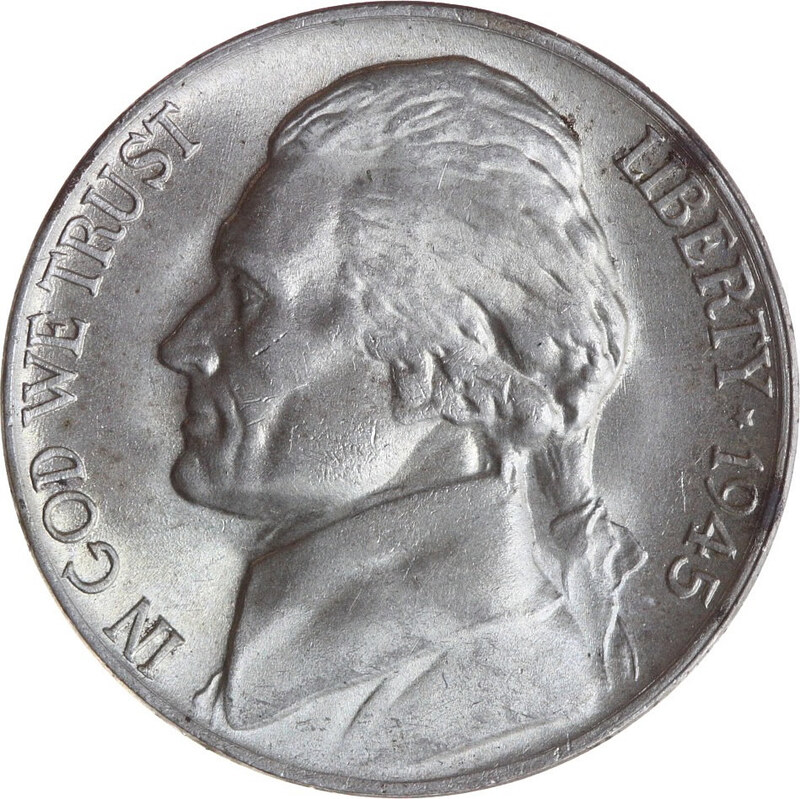
A Jefferson Nickel contains no silver for the Copper-nickel five cents (1938–present) and 0.0563 troy oz of silver for the Wartime silver alloy (1942–1945).
Spot price as of October 21, 2026
About This Series
Felix Schlag won a public competition in 1938 to design the Jefferson nickel, which replaced the Buffalo nickel. His initials weren't added to the obverse until 1966, nearly three decades in. The "wartime" nickels from 1942 to 1945 were struck in 56% copper, 35% silver, and 9% manganese to save nickel for war production; a large mintmark on the reverse identifies them. The 1950-D had a low mintage and was heavily hoarded. The Westward Journey designs in 2004 and 2005 were the first major reverse change in 66 years; a new portrait and reverse followed in 2006.
Specifications
Copper-nickel five cents, 1938–present
- Composition
- 75% Copper, 25% Nickel (no silver)
- Fineness
- 0.0%
- Weight
- 5.00 g
- Diameter
- 21.2 mm
- ASW
- 0.0000 oz
- Years Produced
- 1938–present
ASW and melt value by era
| Era | Years | Weight | Fineness | ASW | Melt value |
|---|---|---|---|---|---|
| Copper-nickel five cents | 1938–present | 5.00 g | 0.0% | No silver | No melt value |
| Wartime silver alloy | 1942–1945 | 5.00 g | 35.0% | 0.0563 oz | $3.23 |
- Every Jefferson nickel except the 1942–1945 wartime issues.
- “War nickels” carry a large mint mark above Monticello on the reverse.