 INDEX
INDEXThe Gilded Legacy: A Guide to Pre-1933 U.S. Gold
Pre-1933 gold coins are more than currency; they are artifacts of a nation growing up. From the California Gold Rush to the Gilded Age, these coins fueled American expansion until the government made owning them a crime.
For historians and investors alike, they offer a unique proposition: tangible gold wealth with a story attached. They survived shipwrecks, bank failures, and the Great Confiscation of 1933 to land in modern collections.
Part I: The Era of Hard Money (1795–1907)
For the first century of its existence, the United States ran on "hard money." The Coinage Act of 1792 established the dollar's value in gold, creating a system where the currency was the asset, not just a promise.
The Gold Rush Change
Everything changed in 1848. The California Gold Rush flooded the economy with metal, overwhelming the Mint's ability to strike small coins. In response, Congress authorized the Double Eagle ($20) in 1849. Containing nearly a full ounce of gold, it became the heavy lifter of international trade and banking reserves.
Common Pre-1933 Denominations
| Denomination | Name | Gold Content (Troy Oz) | Primary Use |
|---|---|---|---|
| $2.50 | Quarter Eagle | 0.12094 | Everyday commerce, gifts. |
| $5.00 | Half Eagle | 0.24187 | The workhorse of domestic circulation. |
| $10.00 | Eagle | 0.48375 | Bank reserves and large purchases. |
| $20.00 | Double Eagle | 0.9675 | International trade settlements. |
For decades, these coins featured the "Liberty Head" design—dignified, functional, but arguably boring. That would change with a new President.
Part II: The Renaissance (1907–1933)
In 1904, President Theodore Roosevelt wrote to his Treasury Secretary: "I think our coinage is artistically of atrocious hideousness."
Roosevelt wanted American coins to rival the high-relief masterpieces of ancient Greece. He bypassed the Mint's bureaucracy and hired Augustus Saint-Gaudens, the nation's premier sculptor, to revolutionize the designs.
The Saint-Gaudens Double Eagle
The result was the $20 Saint-Gaudens Double Eagle, widely considered the most beautiful coin ever minted. It depicts Liberty striding forward, torch in hand, with the Capitol building in the background.
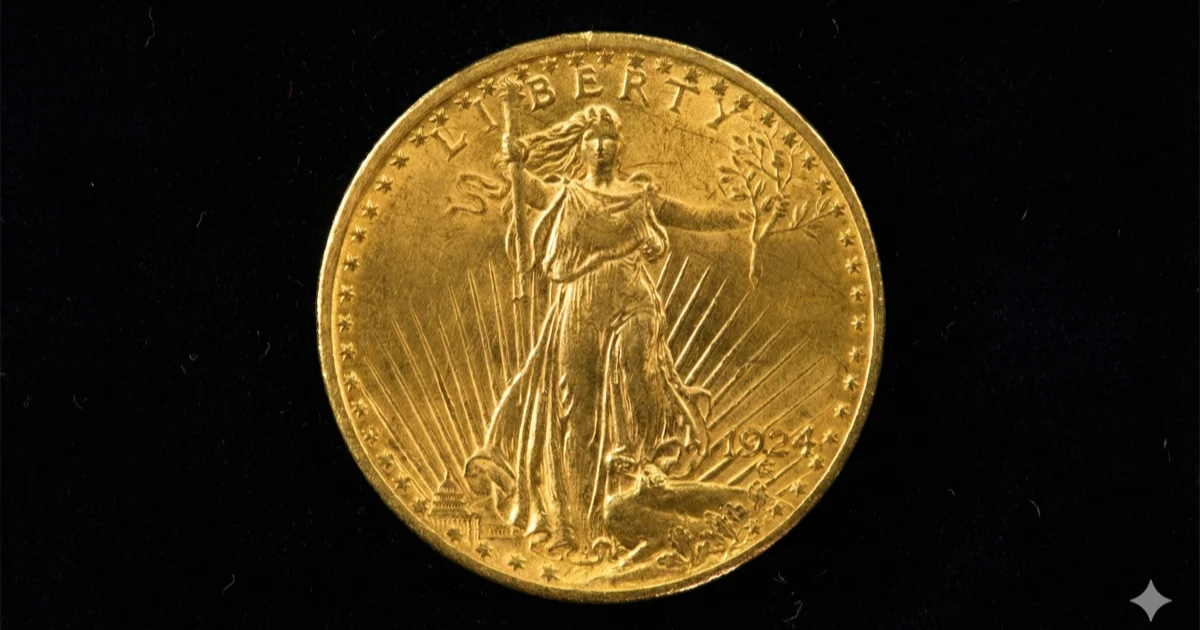 The Saint-Gaudens Double Eagle: Roosevelt's artistic vision realized.
The Radical "Indians"
Saint-Gaudens' student, Bela Lyon Pratt, took the revolution further with the $2.50 and $5.00 coins. He used an incuse design, where the image is sunken into the metal rather than raised. The public initially hated them—fearing the recessed design would trap "germs"—but today they are celebrated for their daring originality.
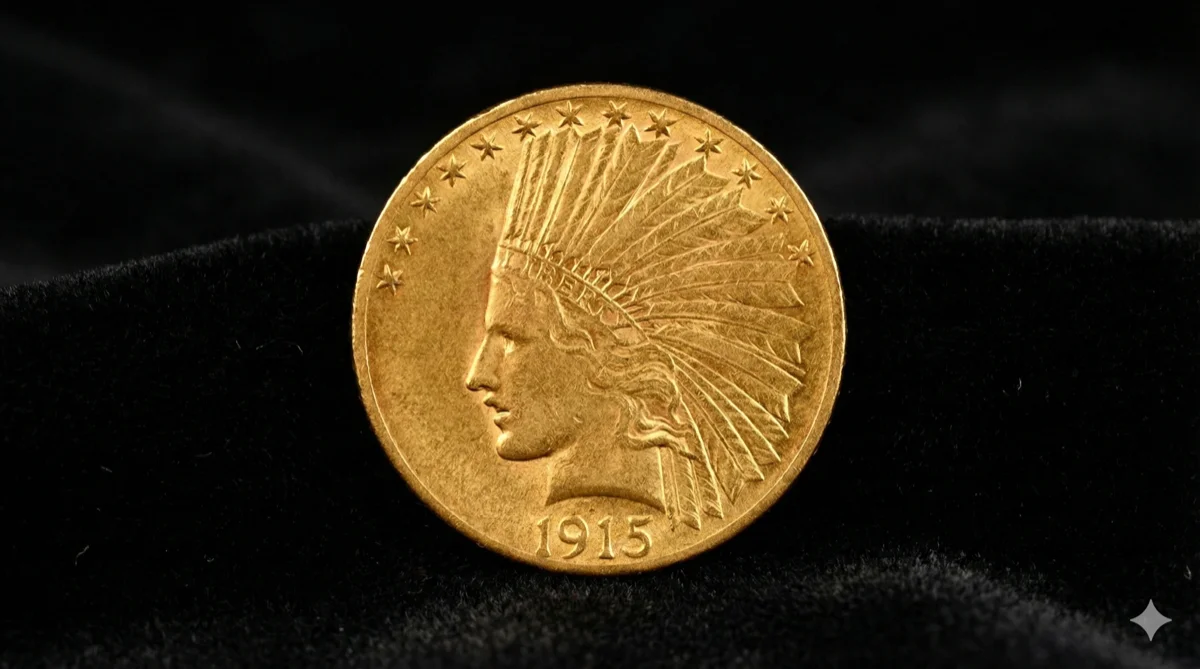 The Indian Head $10 Eagle featured a realistic Native American portrait.
Part III: The Great Confiscation (1933)
The party ended in 1933. To fight the Great Depression and stop gold hoarding, President Franklin D. Roosevelt issued Executive Order 6102.
The order criminalized the possession of monetary gold. Citizens were forced to surrender their coins to the government for $20.67 an ounce. Millions of coins were melted into bars, severing the link between Americans and their gold money.
The Collector's Loophole
Crucially, Section 2(b) of the order exempted "gold coins having a recognized special value to collectors." This clause saved the hobby. While common coins were destroyed, "rare" examples—and many that were simply hidden away—survived.
Part IV: The 1933 Double Eagle Saga
No coin illustrates this era better than the 1933 Double Eagle.
Nearly 500,000 were struck, but the melt order came before they could be released. Officially, all were destroyed except two for the Smithsonian. But a handful "escaped" the Mint (likely stolen).
Decades later, one surfaced in the collection of King Farouk of Egypt. After a legal saga lasting half a century, it was declared the only 1933 Double Eagle legal for private ownership, selling for over $7.5 million in 2002. Ten others found by a Philadelphia family were seized by the government in 2004, a stark reminder that the 1933 confiscation order is technically still enforced for stolen property.
Part V: Treasures of the Deep
Some of the finest known gold coins didn't come from vaults, but from the ocean floor.
- SS Central America (1857): The "Ship of Gold" sank in a hurricane carrying tons of California gold. Recovered in the 1980s, its coins were preserved in pristine "mint state" condition by the cold deep-sea water.
- SS Republic (1865): Lost after the Civil War, this wreck yielded 51,000 coins, including ultra-rare issues from the New Orleans Mint.
Part VI: Modern Collecting & Investing
Today, Pre-1933 gold occupies a sweet spot between history and bullion.
The "Premium Compression"
Historically, these coins traded at high premiums over their gold content. However, as the price of gold has soared, that gap has narrowed. In the current market, you can often buy a 100-year-old gold coin for a small percentage over its melt value.
Why Buy Pre-33?
- History: You hold a piece of the Gold Rush or the Roaring Twenties.
- Scarcity: They aren't making any more.
- Privacy: Unlike some modern bullion transactions, the sale of these collectible coins often has different reporting requirements (though capital gains tax still applies).
Grading Matters
Because condition is everything, serious collectors buy coins certified by PCGS or NGC. The difference between a "MS63" (Choice Uncirculated) and "MS65" (Gem) grade can mean thousands of dollars in value, despite the coins looking nearly identical to the naked eye.