 INDEX
INDEX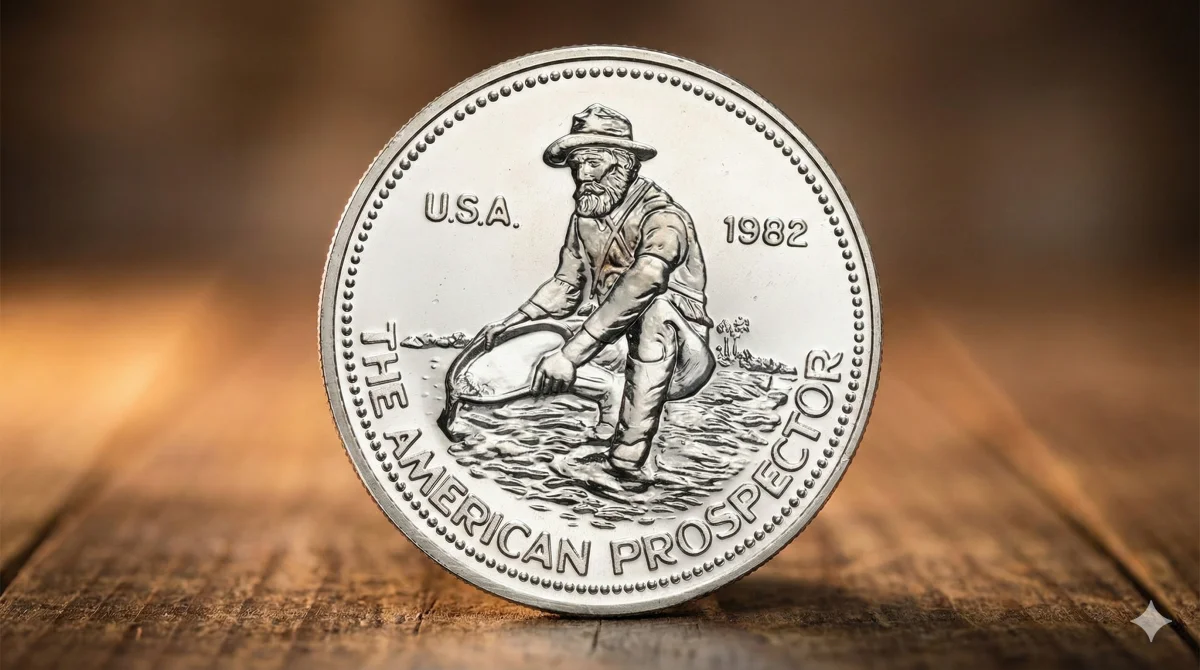
The Industrial Standard: Collecting Engelhard Silver
In the world of precious metals, few names carry the weight of Engelhard. For decades, this industrial giant was the undisputed king of refining, producing silver and gold that became the global benchmark for purity.
But Engelhard isn't just about bullion anymore. Since the company ceased retail production in 2006 (following its acquisition by BASF), its bars and rounds have transformed from simple stores of value into highly sought-after collectibles. To own an Engelhard bar is to own a piece of American industrial history.
Part I: The Platinum King
The story begins in 1902 with Charles W. Engelhard, Sr., but it was his son, Charles Jr., who turned the company into a global powerhouse. Known as the "Platinum King," Engelhard Jr. was a larger-than-life figure—a racehorse owner and international tycoon who reportedly inspired the James Bond villain Auric Goldfinger.
Under his leadership, the company didn't just refine metal; it revolutionized industry, creating the first catalytic converter. This industrial DNA is stamped into every bar they made. Unlike modern "collector" mints that focus on pretty packaging, Engelhard bars were built for work. They are heavy, simple, and honest.
Part II: The Cult of the Poured Bar
While Engelhard produced millions of ounces of silver, collectors flock to the vintage "poured" bars. These ingots were cast by hand, resulting in cooling lines, ripples, and unique character marks that make every single bar unique.
The 10oz "Loaf"
The 10oz poured bar is the entry point for many serious collectors. Often shaped like a small loaf of bread, these bars feel substantial in the hand.
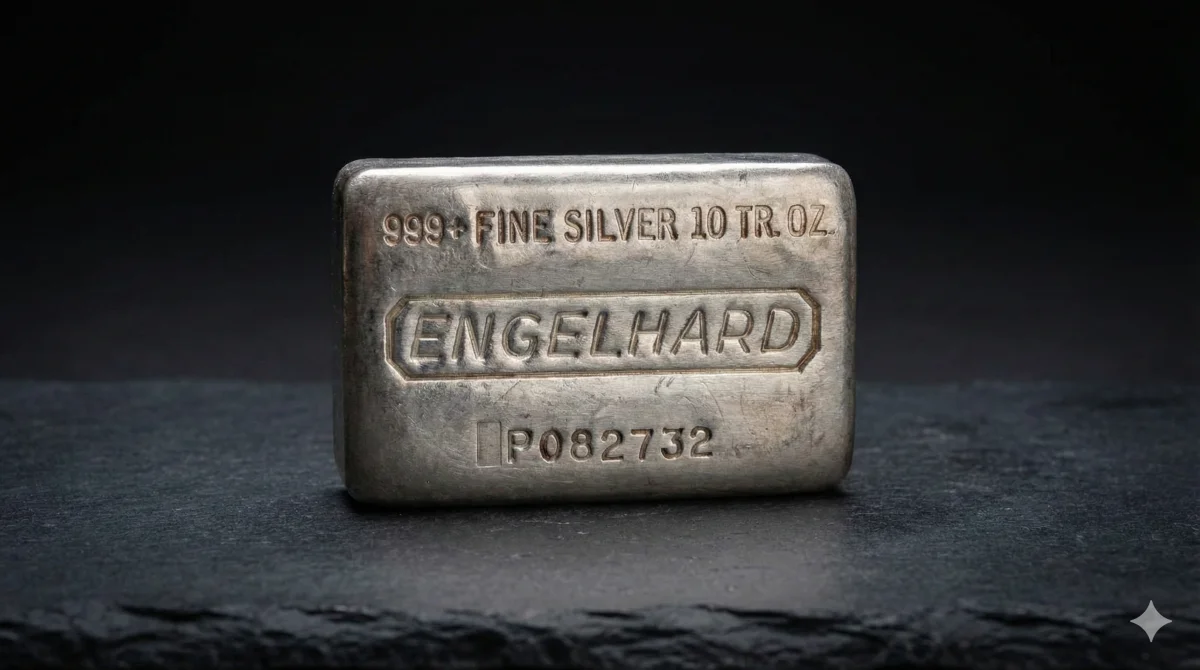 A classic 10oz Engelhard poured bar, showcasing the unique cooling lines and "bullion" character.
Collectors categorize these bars by "Series," tracking minute differences in the logo stamp or the shape of the mold. Some rare series (like the "7th Series" with specific font spacing) can trade for double or triple the spot price of silver.
The 100oz Heavyweight
For the serious investor, the 100oz bar was the standard. Weighing nearly 7 pounds, these bars were the bricks that built many investment portfolios in the 1970s and 80s.
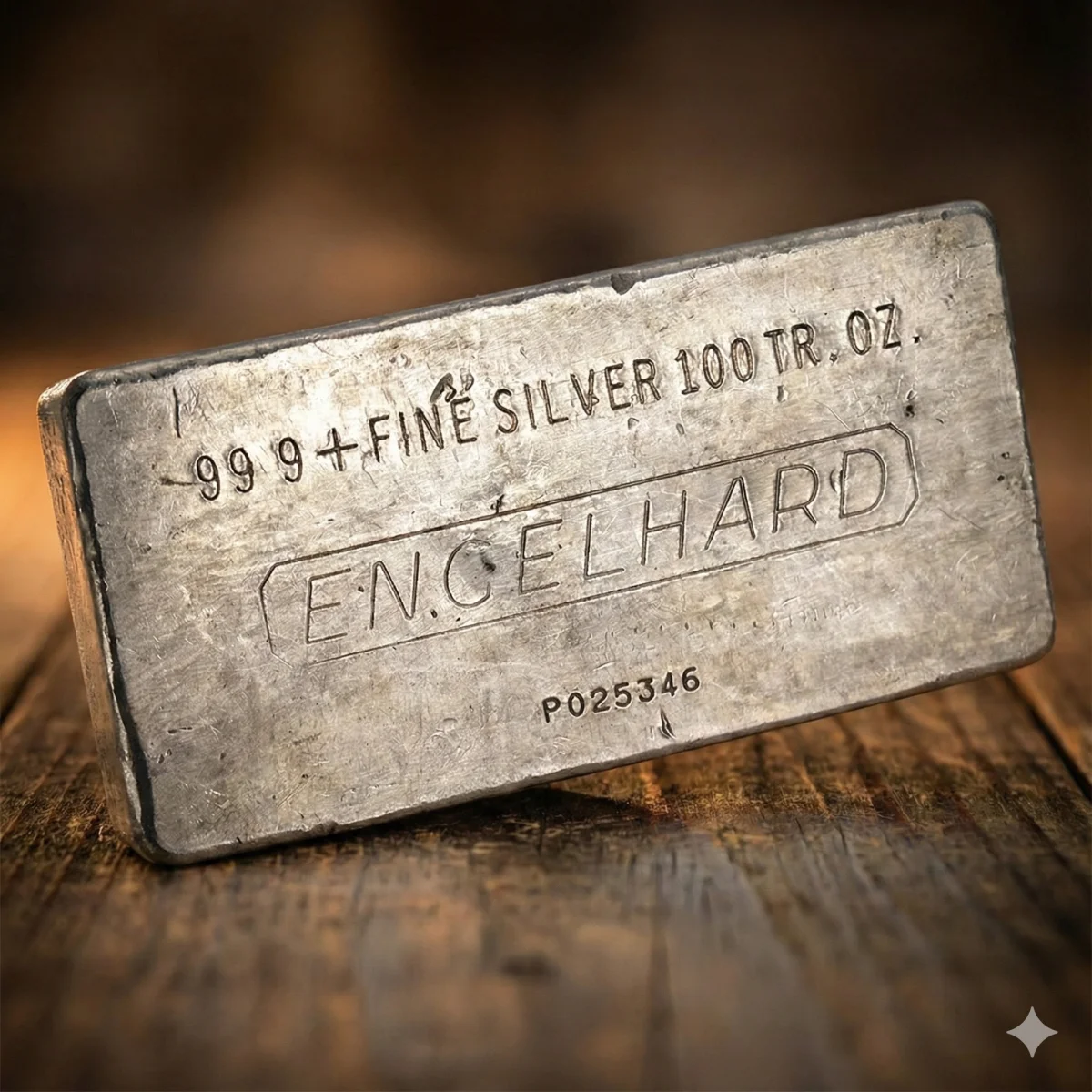 The 100oz Engelhard bar: The former industry standard for silver investment.
Sadly, because these bars were so common, countless thousands were melted down during the silver spikes of 1980 and 2011 to be turned into jewelry. This "Great Melt" has made surviving vintage 100oz bars surprisingly scarce.
The Elusive 20oz
While 10oz and 100oz bars were standard production, Engelhard also produced "odd weight" bars like the 20oz. These are significantly scarcer than their standard counterparts.
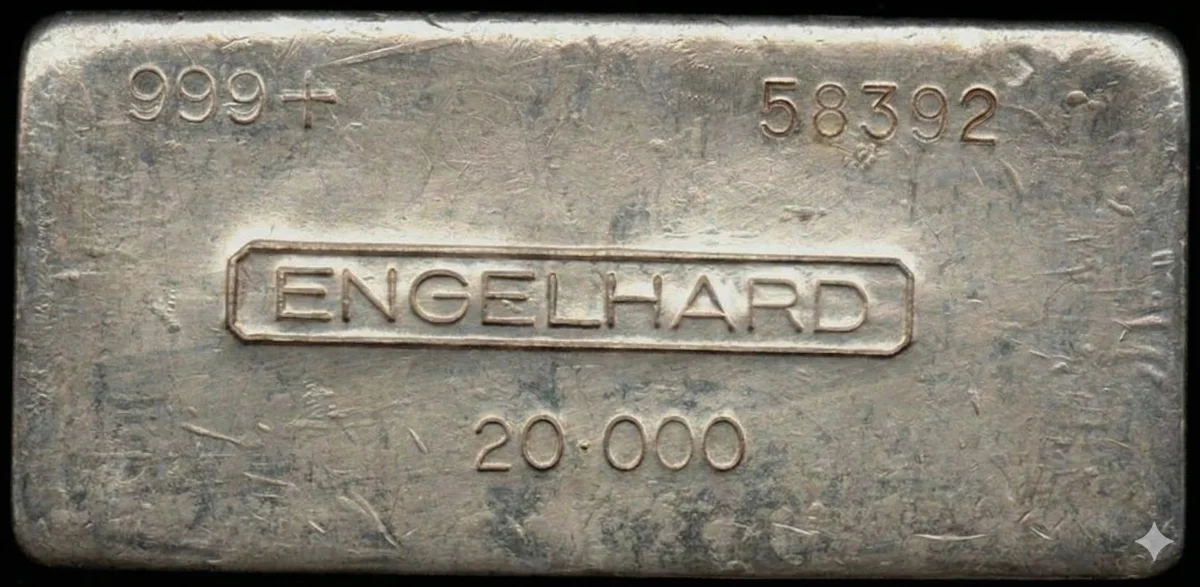 A rare 20oz poured bar. Odd-weight sizes like this often command higher premiums due to their lower production numbers.
Part III: The American Prospector
In 1982, Engelhard changed the game by introducing the American Prospector, the first widely successful commercial silver round. Designed to compete with government coins, it offered investors a trustworthy, fractional way to own silver.
The design features a rugged prospector panning for gold—a nod to the hard work of discovery.
The Eagle Reverse (1984)
While the front of the coin remained consistent, the back (reverse) saw changes. The most famous variation arrived in 1984, replacing the simple "E" logo with a majestic Eagle.
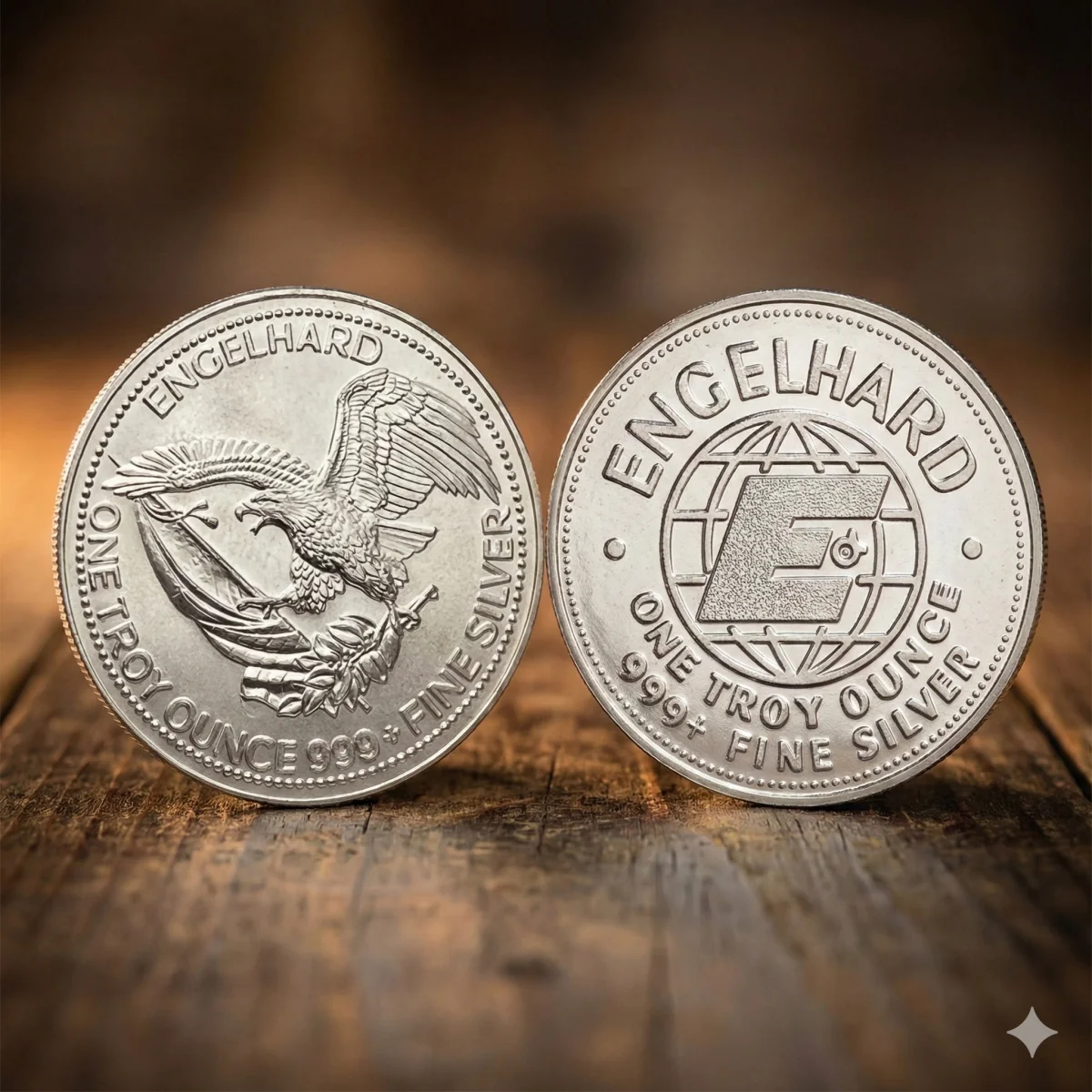 The 1984 "Eagle" reverse, a favorite among collectors for its patriotic design.
Because 1984 saw both the old "Big E" design and the new "Eagle" design, it is a key year for collectors trying to complete a set.
Part IV: Rarity and the "Tier" System
Because Engelhard never released official mintage numbers, dedicated collectors have created their own "Tier" system to rank rarity based on observed serial numbers.
- Tier 1 (Exceedingly Rare): Fewer than 250 known. These are the "Holy Grails," often odd weights like 3oz or 4oz bars, or specific error varieties.
- Tier 3 (Rare): Fewer than 20,000 made.
- Tier 5 (Common): The standard production bars. Even "common" Engelhard bars, however, command a premium over generic silver.
Part V: A Legacy Reborn?
In 2025, the Engelhard name returned to the market through a partnership with PAMP Suisse. While these modern "tribute" pieces are beautiful and high-quality, they are distinct from the vintage originals. For the purist, nothing replaces the history, the patina, and the sheer industrial weight of a vintage Engelhard poured bar.
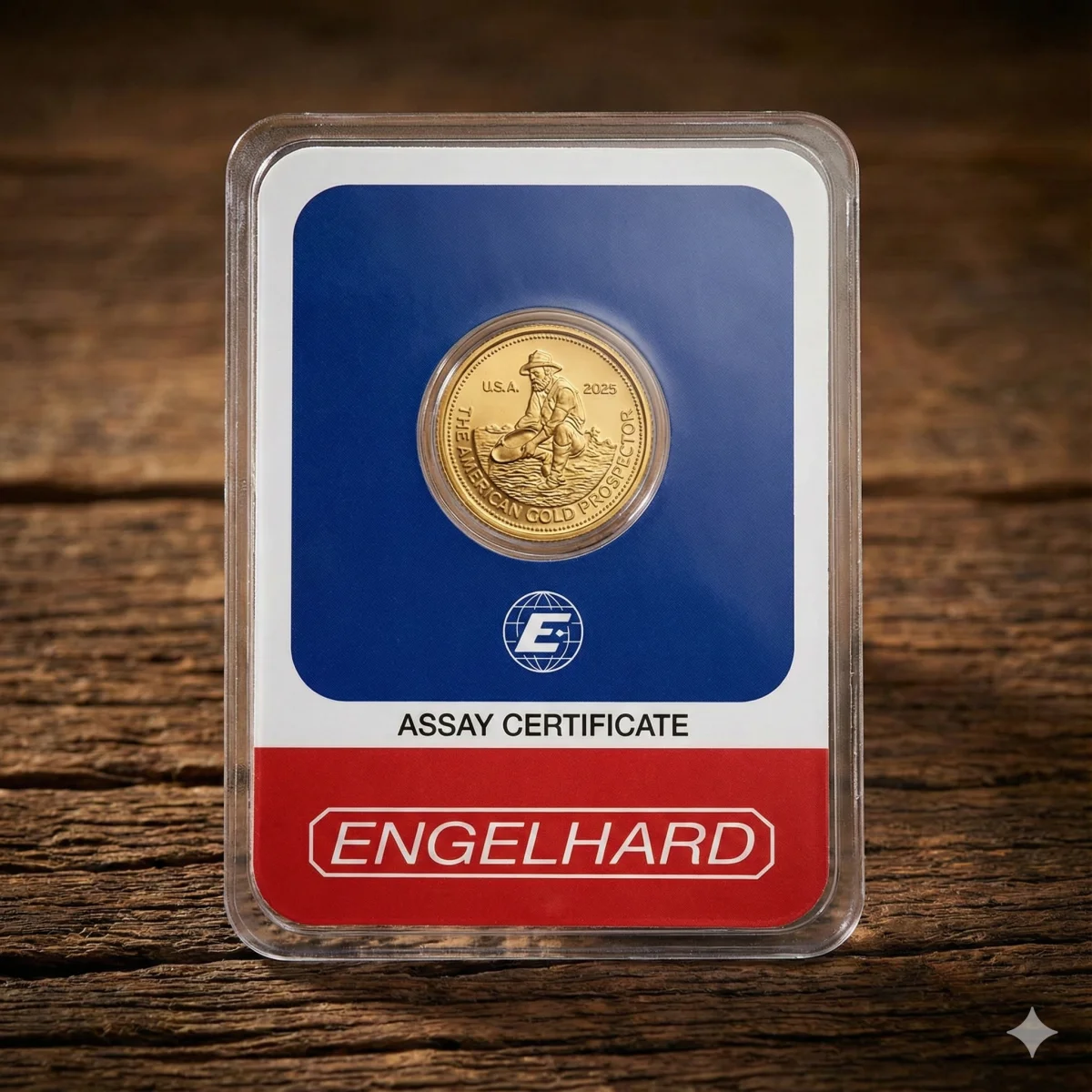 The 2025 Gold Prospector, marking the return of the legendary name.